For the ones who matter most.
Taking Your Child’s Temperature (0–18 years)
Learn when and how to take your child’s temperature accurately using the safest and most reliable methods. This guide explains which thermometers to use, why armpit and oral measurements are preferred. It also helps you understand what fever means and when to seek medical care, so you can confidently respond when your child is unwell.
Dr Mohamad Farhat
4/7/20262 min read
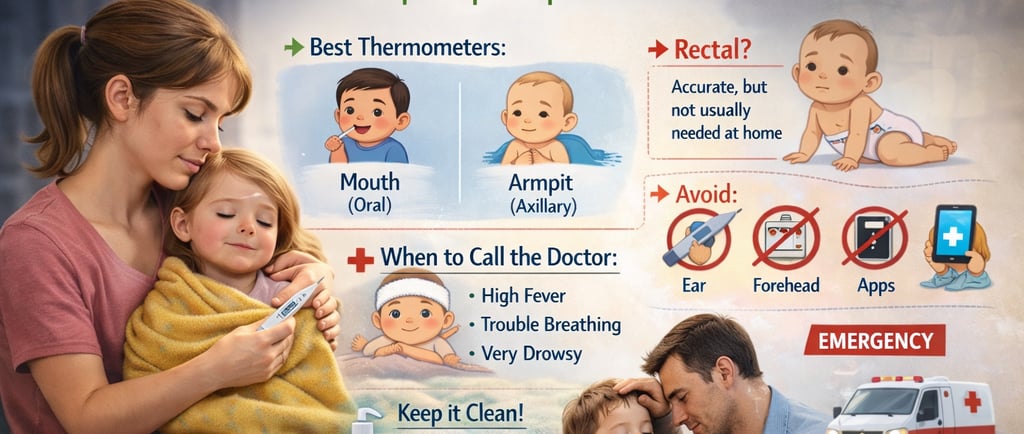
Knowing how to check your child’s temperature correctly can help you stay calm and act quickly when needed.
When should you check your child’s temperature?
You can take your child’s temperature at any time, but it’s especially helpful if your child:
• feels warm or unwell
• is unusually irritable or crying
• seems more sleepy than usual
• is in pain
• refuses to drink
• is vomiting
A normal body temperature is around 37°C.
A fever is when the temperature is 38°C or higher.
⸻
Which thermometer should you use?
The most reliable option is a digital thermometer used:
• in the mouth (oral)
• or under the armpit (axillary)
👉 Touching your child’s forehead with your hand is not accurate for detecting fever.
What about rectal temperature?
Rectal measurement is the most accurate way to measure body temperature, especially in very young babies (especially under 3 months).
However, it is not usually recommended for parents at home because:
It requires proper technique to be done safely
Parents may feel anxious or unsure performing it
👉 In most situations, an armpit measurement is safer and sufficient, especially when you also observe how your child is behaving.
⸻
What to avoid
Some thermometers are easy to use, but not very reliable:
• Ear thermometers → often inaccurate
• Forehead (temporal) thermometers → not precise
• Pacifier thermometers, fever strips, phone apps → not recommended
⚠️ Mercury thermometers should be avoided — they can be dangerous if they break.
⸻
How to use a digital thermometer
Always read the instructions before using your thermometer for the first time.
If you’re unsure, your doctor or pharmacist can show you how.
👄 Taking temperature by mouth (oral)
Best for children over 4 years old.
• Place the thermometer under one side of the tongue
• Ask your child to close their lips (not bite)
• They should breathe through their nose
• Wait for the beep, then read the result
⏳ If your child just had a hot or cold drink, wait 5 minutes before measuring.
🚫 Avoid this method if your child:
• is too young to cooperate
• has a blocked nose and can’t keep their mouth closed
⸻
🤲 Taking temperature under the armpit
This is the easiest and safest method, especially for younger children.
• Place the thermometer directly against the skin (not clothing)
• Gently hold your child’s arm against their body
• Wait for the beep, then read the result
👉 Armpit readings are usually slightly lower than oral readings — this is normal.
⸻
Hygiene tip
If you use the same thermometer for different methods:
• clean it well between uses
• use warm soapy water or an alcohol wipe
⸻
When should you seek medical help?
Fever itself is common, but what matters most is how your child looks and behaves.
🚨 Seek urgent medical care if:
• your child (any age) has a weak immune system and fever
• your baby is under 3 months old with a fever
👨⚕️ See a doctor if your child (over 3 months):
• has a fever lasting 2 days or more
• has difficulty breathing
• is very sleepy or hard to wake
• is not drinking or urinating less
• has a stiff neck, headache, or light sensitivity
• is vomiting
• develops a rash
• has a febrile seizure
• has pain that doesn’t improve with medication
👉 Also trust your instinct: if your child doesn’t seem right or is getting worse, get medical advice.
⚠️ Emergency situation
Go immediately to the hospital or call emergency services if:
• your child has severe breathing difficulty
• your child is unresponsive
• symptoms are severe or worsening quickly
⸻
❤️ Final message for parents
Temperature is just one part of the picture.
Always look at your child as a whole — their behavior, energy, and comfort matter just as much as the number on the thermometer.
If you’re unsure, it’s always okay to ask for help.